Key Takeaways
-
The Initiative: Primary Health Solutions (PHS) in Butler County, Ohio, is deploying two medical drones as part of its Drone-Enabled Lab Courier Program.
-
The Grant: Awarded $50,000 through ACH’s Community Health Entrepreneur Challenge, in collaboration with UnitedHealthcare Community & State.
-
Operational Impact: Replaces traditional ground couriers to shuttle lab specimens directly to PHS’s centralized PCR lab, cutting an estimated $100,000 in annual transport expenses and saving ~1,000 staff hours.
-
Patient & Resilience Benefits: Accelerates diagnostic turnaround time for faster treatment while serving as a reliable transportation alternative during severe weather emergencies.
Strengthening Access Across Southwest Ohio
Delivering timely, high-quality care requires continuous operational innovation. This is especially true as health centers adapt and evolve to meet growing community needs. Through the Community Health Entrepreneur Challenge, supported by a multi-year collaboration with UnitedHealthcare Community & State, Advocates for Community Health provides seed funding to help members test and scale practical solutions to urgent health care challenges.
Among our latest, phase 3 $50,000 award winners is Primary Health Solutions (PHS) in southwest Ohio. Their winning project, the Drone-Enabled Lab Courier Program, is pioneering a new model for medical logistics across Butler County.
The Challenge: Scaling Logistics in a Growing Health Center
As Primary Health Solutions has grown across Southwest Ohio, the volume of diagnostic testing has expanded rapidly. PHS operates its own centralized PCR laboratory, requiring routine transportation of laboratory specimens from satellite care sites back to the central hub for analysis.
Relying strictly on traditional ground couriers can become increasingly costly and time-consuming as distances and service locations expand. PHS estimates that these traditional transport methods account for approximately $100,000 in annual expenses and consume nearly 1,000 staff hours each year, resources that could otherwise support direct patient care.
The Solution: Airborne Specimen Transport
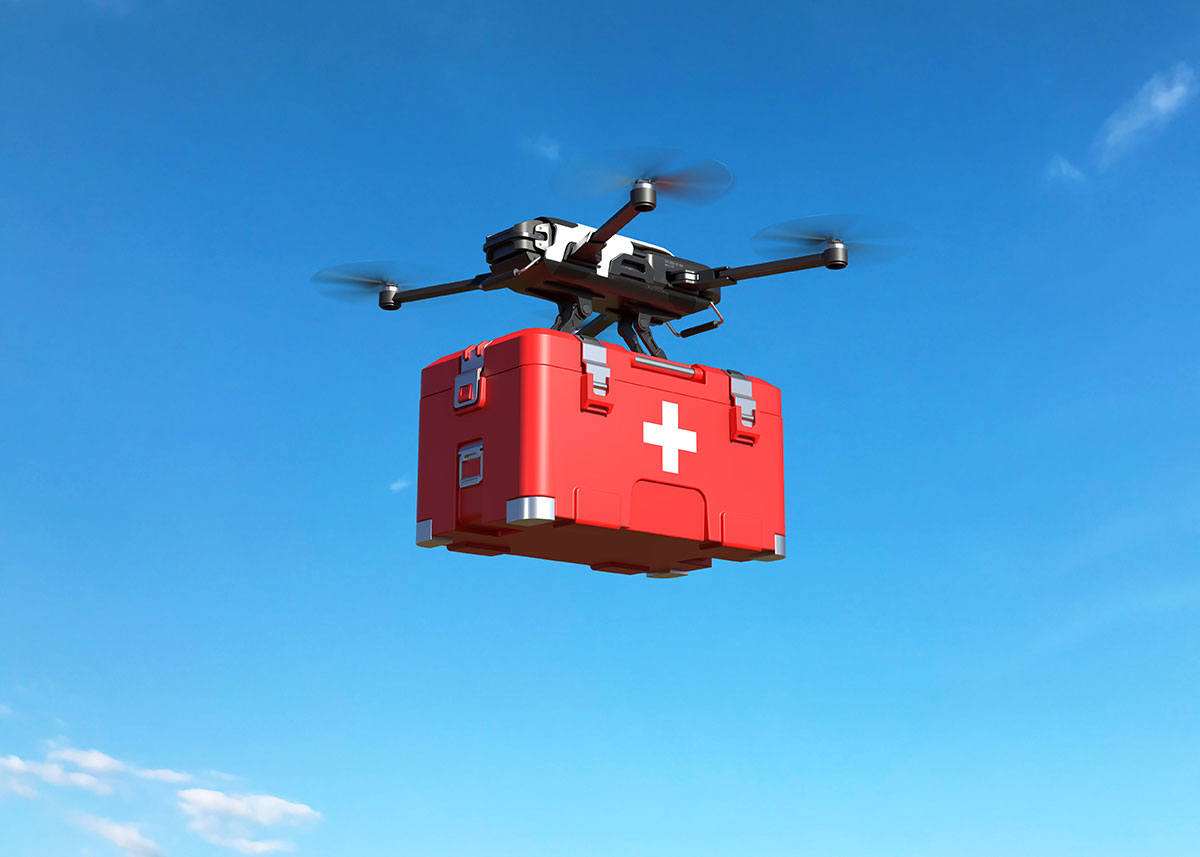
To address this challenge without having to continuously increase its vehicle fleet, PHS proposed an innovative alternative: purchasing and deploying two medical drones in Butler County to transport laboratory samples directly through the air.
Katie Brehm, population health program manager, shared what inspired PHS to look to the skies: “We saw drone technology as an innovative opportunity to overcome geographic barriers, reduce transportation times, improve operational efficiency, and support faster test processing.”
By establishing a rapid transit loop between health center sites and the central lab, PHS bypasses road congestion and streamlines specimen delivery.
Direct Impact on Patient Care and Disaster Preparedness
While the operational savings are significant, the primary beneficiary of this initiative is the patient.
When diagnostic test results arrive faster, clinical teams can make critical care decisions sooner. Brehm continued, “By improving the speed and efficiency of specimen transportation to our centralized PCR laboratory, we hope to reduce turnaround times for test results and support faster clinical decision-making. The ability to receive diagnostic information more quickly allows providers to confirm diagnoses sooner, begin appropriate treatment earlier, and make more informed care decisions.”
Additionally, the program significantly enhances local emergency preparedness. During severe winter storms, flooding, or regional emergencies that make road travel difficult or impossible, drone couriers offer a reliable, weather-resilient backup system to maintain access to essential diagnostic services.
Demonstrating Practical Technology for Community Health
The Entrepreneurial Challenge review committee praised PHS’s creative approach for its potential applicability to community health centers nationwide that face similar rural and suburban transport barriers.
While drone delivery is frequently discussed as a future concept, PHS is proving that the technology is ready to deliver real-world value right now. “We are excited to demonstrate how emerging technology can be used to solve real healthcare challenges,” said Brehm. “While drones are often viewed as a future technology, this project allows us to explore their practical application in improving access, reducing barriers, and supporting better patient outcomes.”
Strengthening the Community Health Center Network
PHS’s drone initiative reflects a broader wave of innovation emerging across America’s community health centers. From severe weather response in coastal regions to cybersecurity and EHR data integration, health centers nationwide are developing creative answers to complex operational demands.
“Whether preparing for hurricanes in Florida or exploring drone technology in Ohio, these projects reflect the innovative spirit that defines the health center movement,” said Amanda Pears Kelly, ACH CEO. “We are proud to support efforts that strengthen community resilience, improve patient outcomes, and generate new ideas that can benefit health centers nationwide.”
To date, the Community Health Entrepreneur Challenge Fund has awarded $2.7 million across seven transformative projects, advancing affordable healthcare access and care delivery across the nation.